

Global aging can be seen as both a triumph and a challenge. As people live longer than ever before, the real issue isn’t lifespan – it’s healthspan: the number of years we remain active, strong and independent.
According to the World Health Organization, the population aged 60 and older is growing rapidly, yet many of those years are spent in declining health. On average, people live more than nine years in suboptimal health – years often marked by reduced mobility, chronic inflammation and cognitive decline.
This has created a global imperative: closing the ‘healthspan-lifespan gap’. Fortunately, both science and consumer behavior are shifting in that direction. Mintel reports that healthy aging is now a leading driver of nutraceutical innovation, as consumers seek proactive solutions that help them live better, for longer.
“A proactive approach to healthy aging could open many doors in the nutraceutical space,” says Line Johnsen, Senior Vice President, Human Health and Nutrition R&D at Aker BioMarine. “We see tremendous potential for solutions that help people maintain mobility, muscle strength and cognitive function – ensuring not just longer lives, but better ones.”
Science confirms: Omega-3s and choline are essential for healthspan
Decades of research has established omega-3s and choline as key nutrients for heart, brain, muscle and metabolic health. Low omega-3 intake ranks among the leading preventable causes of death in the US, while higher Omega-3 Index levels are linked to a significantly lower risk of sudden cardiac death and longer life expectancy.
Newer studies reveal even more compelling effects – showing that omega-3s may slow biological aging at the DNA level by delaying molecular markers of aging.
Similarly, choline – an essential nutrient also found in krill oil – is gaining attention for its brain-protective properties. Recent large-scale population studies show that higher choline intake is associated with slower cognitive decline and up to a 47% lower risk of Alzheimer’s disease in long-term cohorts.
Together, these nutrients form the foundation of cellular health – and that’s where krill oil stands apart, delivering omega-3s and choline in their natural phospholipid form for superior absorption and efficacy.
Understanding aging: From cells to systems
Aging affects the body on two interconnected levels – cellular and physical. At the cellular level, scientists have identified a group of biological mechanisms known as the cellular hallmarks of aging. These include:
Together, these processes drive the gradual loss of cellular function and vitality. At the physical level, these cellular changes manifest as measurable declines: loss of muscle strength and mass; reduced fitness; slower metabolism; weaker bones and cognitive decline. These physical hallmarks of aging are universal, but importantly, they are also modifiable through targeted nutrition and lifestyle interventions.
Understanding these mechanisms helps explain why nutrition at the cellular level can have such a broad impact on physical performance, resilience and longevity.
Krill oil phospholipids: Cellular nutrition in its optimal form
Each cell in the human body is wrapped in a phospholipid bilayer, a protective membrane that regulates nutrient flow and communication. Krill oil naturally mirrors this structure, delivering omega-3 fatty acids (EPA and DHA) and choline bound to phospholipids.
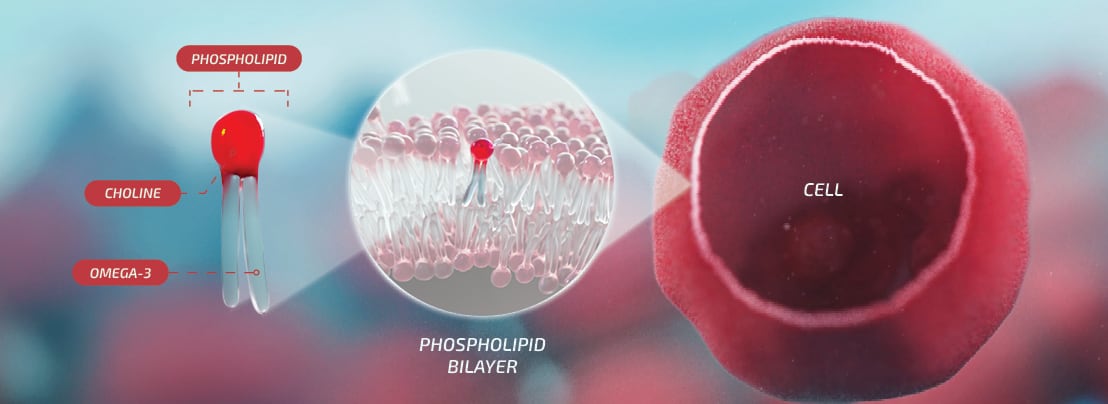
This unique form enhances bioavailability, ensuring these nutrients are effectively absorbed and incorporated into cell membranes across all tissues, from muscles and joints to the brain.
Krill oil supports muscle strength and size in older adults
Loss of muscle mass and strength – known as sarcopenia – is one of the most visible and impactful aspects of aging. Starting in our 40s, we lose an estimated 3% to 5% of muscle mass each decade, accelerating after age 70. This decline reduces mobility, independence and longevity.
In a landmark study conducted by the University of Glasgow, daily supplementation with Krill significantly improved muscle function and size in older adults.
After six months of supplementation, participants showed:
Researchers concluded that krill oil enhances skeletal muscle performance and metabolic resilience in healthy older adults, key indicators of extended healthspan.
Preclinical evidence: Krill oil counters the cellular hallmarks of aging
In a 2022 preclinical study published in Aging, researchers from the University of Oslo, Oslo University Hospital, and Akershus University Hospital investigated whether krill oil could slow aging in roundworms (C. elegans) and human cells.
The results were striking: krill oil (Superba Boost) counteracted several key hallmarks of aging by:
Roundworms supplemented with krill oil not only maintained neuronal health and motor function but also stayed active longer and lived healthier lives. These findings demonstrate that krill oil’s effects extend beyond symptom relief, influencing the fundamental biological processes that drive aging itself.
“This study shows how krill oil can modulate multiple mechanisms linked to aging,” says Johnsen. “It provides biological context for the clinical results we see on muscle, joint and cognitive function.”

info@megaleafhealth.com
Copyright © 2002-2024 Mageleafhealth ADDRESS:12560 Bridgeport Rd Unit 260 Suite 105 Richmond; BC; Canada